A reputable China tour operator & China travel agency from 1987

The different types of structures built by the Chinese vary according to region. Each section of this vast country defines itself with a different architectural style. In Beijing, houses are set in a square compound. The main house is built on the north side and faces due south. This area is where the most important family lives. On the east and west sides of the compound, the houses are generally used for storage, toilet, kitchen, and lesser members of the family.
The inhabitants of Inner Mongolia are nomadic. Therefore, they need houses that are easily transported. This style of home is called a yurt. Yurts take only an hour or so to set up, and they are practically weatherproof. The door is set low to the ground in an effort to conserve heat.
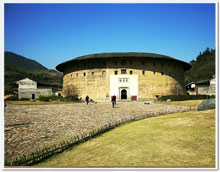 In southeast China, the homes are built like the coliseum one can see in Rome, Italy, a large round structure with many stories. These homes typically house approximately three hundred families. While all of these styles of homes are examples of traditional Chinese architecture, they are becoming less common. Most homes built today are apartment buildings.
Chinese architecture is most famous for the Great Wall of China But, there is so much more to Chinese architecture than just that huge wall. Chinese temples are large and extravagant. Palaces are a pleasure to look at. Even the roofs are breathtaking and detailed to the last drop of gloss or paint.
Chinese structures are based on the principle of balance and symmetry. Office buildings, residences, temples, and palaces all follow the principle that the main structure is the axis. The secondary structures are positioned as two wings on either side to form the main room and yard. The distribution of interior space reflects Chinese social and ethnical values. For example, a traditional residential building assigns family members space based on the family's hierarchy.
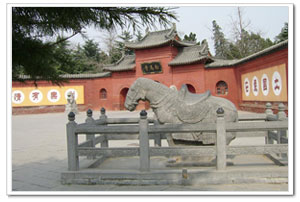 One fabulous example of Chinese architecture is the Buddhist temple which can be found scattered around China. The most distinctive style is the stupa (t'a) or pagoda. The pagoda was mainly used to house sacred objects. Temples take the form of a storied tower, or, more rarely, an over-turned bowl. As the centuries passed, however, the shape of these temples took new forms. In the second and third century, the structures were usually made of wood. Their shape took the form of a tetragon during the 10th Century. During the Tang Dynasty they had octagonal or diagonal towers. The number of stories varied with each building.
Roofs are an important part of Chinese architecture. They not only protect residences from the elements, they also have a symbolic meaning. For example, temple roofs were curved because Buddhists believed that the curves could ward off evil spirits. The temple's roof was made of glazed ceramic tiles and had overhanging eaves distinguished by a graceful upward slope. Most roofs are painted an elegant shade of red, yellow or green.
Also seen on most Chinese structures are elaborate carvings. The designs are found on windows, doorways, or roofs. The Chinese build structures in a geometrical fashion. Doors as wells as windows are often circular in shape.