A reputable China tour operator & China travel agency from 1987

Tracing the evolution of Chinese knot is difficult because little, if any, written reports exist on this subject. Figures of knotted objects appear in paintings and sculptures that date back to ancient times. Remnants of these objects are hard to find since, the cords disintegrated with age. But it is thought that the Chinese traditional decorating knot was developed in the Tang and Song Dynasties (960-1229 AD) and popularized in the Ming and Qing Dynasties (1368-1911 AD).
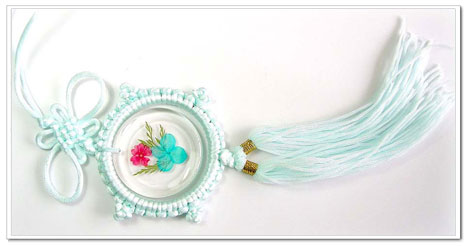 Chinese knots are decorative even in useful objects like buttons or curtain tie-backs. During the late 19th century and early 20th century, fanciful knots made of silk cords decorated tobacco pouches, eyeglasses cases, sachets and other items. The knots, whether simple or intricate, decorated other works of art.
Every knot is made of a single rope and named for its specific form. By combining different knots a unique ornament is formed. Full of Joy, Happiness and Longevity, Double Happiness, Luck and Auspiciousness as one wishes, and Wish you a fair Wind are the names of some popular knots.
The art of Chinese knot nearly became extinct in the 20th century but in recent years has enjoyed a resurgence of interest. Knots can now be seen in abundance as wall hangings, on clothing, and wide variety of decorative objects.