
A reputable China tour operator & China travel agency from 1987

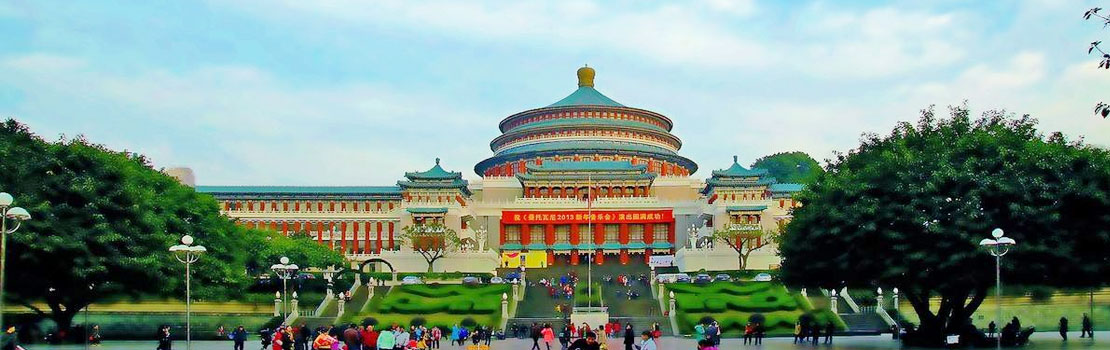
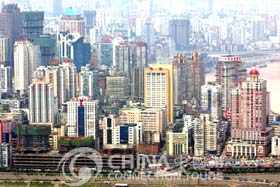 Chongqing, also called Chungking, meaning "Double Celebration", is an autonomous municipality located in southwestern China. It is surrounded on all sides by Sichuan Province. Chongqing is situated on a rocky peninsula at the confluence of the Yangtze and Jialing rivers. It is a major inland port and the leading commercial, transportation, and industrial center of China's southwestern region.
Chongqing is located on the upper reaches of the Yangtze River in the Sanxia (the Three Gorges) area. It has been the transportation hub for the villages and cities along the Yangtze River, as well as the southwest regions of China for many years. Because of its beautiful, surrounding hills and mountains the "Mountain City" has long been recognized for its wonderful scenery. Chongqing has four distinct seasons: a warm winter, a hot summer, a nearly spring and a short autumn. Plenty of rain falls in Chongqing. The annual precipitation is 1,000-1,400 mm.
Chongqing is rich in natural resources. It has 4,474 sq km of uncultivated land, and abounds in non-metallic minerals. Coal, natural gas, strontium, iron sulfate and gypsum have been discovered. There are more than 2,000 types of plants and 380 animal species in the area. The region is one of the oldest industrial bases in China, with three mainstay industries: machinery, chemicals and metallurgical.
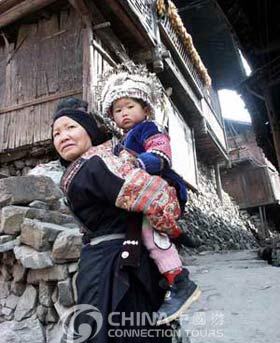
The total population of the area is huge, 30,996,900. The vast majority, 24,456,600 are involved in agriculture. Chongqing natives speak the dialect of the southern Mandarin Chinese, which is said to be "quite intelligible" to speakers of Northern (Standard) Mandarin. Because of their rough tones, people speaking the Chongqing dialect are said to talk like baby boys, while the softer sounding dialect in nearby Chengdu is compared to the speech of young girls. The major religion in Chongqing is Buddhism. The main ethnic groups are Han, Tibetan, and Miao.
There is evidence that pre-historic man lived in the area as long ago as the end of the Old Stone Age--20,000 to 30,000 years ago. Succeeding dynasties established their capitals in the area and during the Ming and Qing Dynasties (1368-1911) it became a busy commercial city. In 1891 Chongqing became an open port, and a customs house was established there. Shipping and trade and the financial and processing industries grew steadily more prosperous as the city became the link between southwestern China and the rest of the world. In 1929 Chongqing was formally declared a city. Following the outbreak of the war against Japan in 1937, the Kuomintang (KMT) moved the government from Nanjing to Chongqing. From 1940 until 1946, it served as the wartime "provisional capital" for the KMT government, becoming China's political, economic, financial, commercial, transportation, cultural and diplomatic center. The city was liberated in 1949.




 People