A reputable China tour operator & China travel agency from 1987

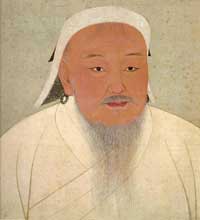 During the Yuan Dynasty, which lasted from 1279 to 1368 AD, China was part of the Mongol Empire. Genghis Khan led the Mongols in their defeat of much of China; however, it was his grandson, Kublai Khan who became the emperor and founder of the Yuan Dynasty. It was the first time that foreigners had ruled all of China. The Yuan Dynasty initiated the first direct contact between China and the West.
Kublai Khan moved his capital from Karakorum in Mongolia to Beijing in China. The construction of the new capital based on traditional Chinese models was started in 1266 AD. Despite attempting to rule in a Chinese fashion, the government of the Yuan Dynasty had virtually no Chinese officials. Mongols and other foreigners were given all government positions. The cultural gap resulted in lighter government than that of previously and punishments were much less severe. The Chinese nobility were better educated than the Mongol invaders. The best scholars founded private academies and refused to teach in government schools.
Since the Chinese nobility were not allowed to be involved in government, they were free to pursue art and literature. Poetry, while being vastly popular, was not greatly improved upon. The greatest advances in literature were in the forms of theatre and opera. The theatre was a favorite form of entertainment for the emperors and wealthy families. Western musical instruments were introduced to enrich the Chinese performing arts. Advances were made in the fields of cartography, geography, and scientific education.
Early Yuan emperors sought to protect the peasants by devising a regular, fixed system of taxation. Agriculture was fostered, and new crops like sorghum were introduced. Cotton was widely planted. With the peace imposed on much of Asia by the Mongols, trade was booming. Overseas merchants brought horses, carpets, medicines, and spices to China, and exported Chinese textiles, ceramics, and lacquer ware. Active trade also introduced Chinese innovations like printing techniques and porcelain to Europe, while the production of thin glass and cloisonné were brought to China. Due to the comparatively easy access to China, many people traveled to China. Best known of the foreigners believed to have reached China during this period was Marco Polo, whose account of his travels portrays the wealth and splendor of Chinese cities.
In later years, excessive spending and trade restrictions severely depleted China economically. Canals and palaces were built, which required the peasants to both supply more tax money and to leave their homes to build them. Campaigns were also launched against Japan which were not successful and destroyed many Chinese ships. The Mongols took over a rich China and less than one hundred years later left an impoverished nation.
Popular uprisings broke out and Chu, the leader of one of these rebellions, succeeded in uniting several other groups with the nobility to overthrow the Yuan dynasty. The general impoverishment of the country also had dual effects on the removal of the Mongols. First, the peasants and nobility both were impoverished which led to the popular uprisings. Second, China was so impoverished that the Mongols did not have a very strong interest in maintaining their hold on China.